How To Make Your Dollar Stretch Living On The Road

Stretch Your Dollars

So you saved up enough money to start living on the road OR you’re taking your remote job on the road with you.  As you’re excited and have been traveling, you quickly find out that you’ve exceeded your budget based on your method of travel.  Living full-time is not a vacation so you need to watch your money or it won’t last long.  In this blog I will provide you the information you need to make your dollar stretch while living on the road.

Make Being Frugal Part of Your Life

Being frugal while living on the road can really help your dollar go a long way. By keeping things simple you won’t spend money on the extras. Here are some basic ideas to being frugal:

  • Thrift Stores
  • Workamp for you site instead of paying
  • Batch cook instead of eating out
  • Use coupons 
  • Look for clearance and discounted items.

Slowly Get Rid of The Unessential’s…Think Minimalism

This one can go side by side with being frugal. Minimalism is basically living with less. When you live with less you don’t need to spend money on items or services you don’t need while living on the road. Here are some tips to keep in mind about taking the minimalist route:

  • Think about what you need not want in life. We need food, clothing, shelter and water. Items for work, health, etc., will be different for everyone.
  • Having minimal amount of stuff means you are not paying for the extras you don’t need.
  • You are less likely to overspend when having a minimalist mind and lifestyle.

Buy In Bulk and Quality

When you do your resupply in town try to buy in bulk. That is of course if you have the space to do so. It may cost more in the beginning but saves you money in the end.

Also buy better quality items. For example:

  • Hiking or Camping Gear- This could range from backpacks to tents and everything in between.
  • Solar-having a good solar power system not only can last you a long time but save you money since you don’t have to use electricity or have to buy propane. Some areas may be more solar friendly than others when it comes to weather. 
  • Kitchen Items such as blenders or kitchenware. 
  • Shoes-This especially goes for hiking, sport or work shoes. Of course check the thrift stores 1st because you may find the quality brand you are looking for.
  • Tools-Stick with good brands like Dewalt or Milwaukee.
  • Clothing-Again check the thrift stores before paying full price.

These are just a few examples to keep in mind when buying quality as opposed to buying something at a cheap price and then having to repurchase that item again.

Don’t Travel As Much

Gas prices as well as wear and tear on your vehicle can make your money go down the drain…….and quick! Consider these ideas while you are living on the road:

  • Boondock. Stay on free public land for 2 weeks instead of 2 days.
  • If you stay at paid campgrounds look into weekly or monthly rates. They may be cheaper in the long run compared to daily.
  • Stay in one spot until you reach your financial goals.

Find Creative Ways To Make Money Living On The Road

If you don’t already have a job that you can take on the road with you, you may find that your funds will not last a lifetime. That means you may have to make some type of income to not only support your current income but support you when you are older. Below are some ideas to get you started:

  • Be a Digital Nomad-Basically your workplace is online and wherever an internet connection is. Examples of digital nomad jobs are a programmer, website designer, SEO specialist, or a customer support representative.
  • Become a Freelancer-This option you can utilize both the digital and physical world. Examples of a freelancer would be a writer, a tutor, a transcriber, or an illustrator.
  • Do seasonal work in whatever areas you travel to-This could be seasonal retail or restaurant work, working at ski lodges or summer resorts, campgrounds, the list could go on.
  • Odd End Jobs-These jobs include but are not limited to pet sitting, craigslist jobs, delivering food or being a personal taxi service.
  • Stick with a 9 to 5-If you do not want to travel then stick with your day job.

Consider Investing

No I don’t mean hit the stock market while living on the road. Unless you want to of course. There are many ways to invest your money to make it a sort of passive income while you do little or no work. Here are some ways to invest your money while living on the road:

  • Bonds-Basically you are loaning money for a certain amount of time and you get that money plus interest. Treasury securities are issued by the government where other bonds can be issued by another entity like a corporation.
  • Real Estate-Real estate is a good source of passive income while you are on the road. Better yet, if you have a house and are downsizing, consider keeping your house to rent out to someone to generate income.
  • Become an Affiliate-If you have a website, a blog or even make videos for a living you can earn side income through an affiliates program. You pretty much will earn a commission by posting a merchant’s website link if someone purchases something from that link on your site.
  • Invest in a Business– This could be either starting your own business or investing in an already established business.
  • Stocks-If you invest in lets say an Amazon stock you share ownership of the business, so whatever they profit you can profit a percentage as well.
  • Put your money in a high yield savings account or money marketing account-Instead of putting your money in a regular savings account, which won’t give you much interest, try an online bank that will give you a higher interest rate. 

The beauty with this option is you can have a versatile portfolio all the while earning your normal income. It’s a good way to make money and keep up with inflation without doing much. One thing to keep in mind is patience and go for the long term to get the most money out of your investments. 

As always, put in some extra research before doing any of these investing options that you can fully understand what you are getting into.

Making your dollar stretch while living on the road can be very easy once you put your mind to it. You may have to use multiple methods to get the right fit with your lifestyle. So don’t wait until your funding runs out. Start building that cash while you are living on the road.

We hope you find these tips helpful.

Dora & Ed

Making Friends As A Nomad – Ed’s Hard Work

Click the photo to be taken to the video

Todays video I’m so happy to be able to show you how hard Ed has been working on our truck and making it beautiful again. Making friends on the road can be one of the most rewarding things about RVlife. All Nomads come from a more settled life, and they bring with them the close friends they’ve made through work, school and community. As a full-time RVer, you can sustain those relationships and create new friendships as you travel. Embrace those friendships, keep in contact with them until you meet again on down the road.

Thanks!

Dora & Ed

RV Driving Tips for New Drivers

Driving Tips

Driving an RV or a motorhome is very different from driving a car and once you start driving you will quickly begin to realize that towing or driving an RV is nothing like driving a car or even a truck.
As a first-time owner or even an experienced RV driver, you should learn as much driving RV as possible so that you are prepared for every scenario from tight turns to backing into small parking spaces.
Here are some top driving tips for new drivers of RVs and motorhomes to check out before hitting the road.

Go Slow The first tip when driving or towing an RV is to go slow. Unlike other drivers, who are usually rushing to get to their destinations, you’re taking your time. Owning and driving an RV or a motorhome is supposed to be a leisurely experience, so going slow is all part of the package.
It is recommended to always drive around the 63 miles per hour mark and never exceed 65 miles per hour. Don’t worry about impatient drivers around you – drive at the speed limit and stay in the slow lane. Driving at a leisurely speed will also give you better gas mileage.

Keep Far Right Unless you’re driving outside of the US, motorists should stick to the right lane when driving. If you are driving an RV, this is generally the rule of the road. Motorhomes and RVs are large, lumbering vehicles and it is safer for everyone on the road if they stick to the right lane. Driving in the right-hand lane also allows you to be close to the shoulder should you have any mechanical issues and gives you the best visual access from your driver’s side mirror. But, an exception to the rule may be traveling in the center lane on a multi-lane highway. We have found in our travels the lane overall is wider and the center lane allows you to change lanes for upcoming exits on the right or left-side of the highway easier.

Adjust your mirrors

Adjust Your Mirrors It is very important to always have an eye on the rear of your vehicle at all times. Before heading off on any trip, adjust all your mirrors so that you have a clear vision of the rear of your RV from all angles. But, don’t hyper-focus on the rear of your RV and not also focus on the road in front of you.

Measure height & length

Know Your Literal Limits A RV is a large vehicle and it’s important to know the limits of the vehicle from the width to the height. Your road trip may take you to a range of different locations from narrow overpasses to low tunnels and you don’t want to be worrying whether your RV will fit under that tunnel or be too wide for that overpass.
Take the measurements of your RV before you go. Measure the width and the height and keep these in mind when driving through tunnels and overpasses. We printed a small label and stuck it to our GPS so when we get into a situation you are unsure, you look at the label for direction. If you do happen to come across a tunnel or overpass with less clearance than your vehicle allows, use your GPS to find another route to avoid getting stuck.

Understand Your Tail Swing The tail swing of a motorhome or an RV is “the distance that the body of the RV behind the pivot point moves in the opposite direction of the front when you turn.” If your RV is made up of two parts – the cab which is the shorter part of the vehicle and the coach, which is the longest part. The coach will not turn at the same time that the front of the RV does, so you will need to calculate your exact tail swing to accommodate and plan for that distance gap.
The best way to do this is to find an empty street or parking lot and have another person watch as you turn to calculate the tail swing. Park the vehicle flush with a painted white line and use the white line as a reference point for turning. Depending on the size of your RV and how tightly you turn, average tail swings are between 18 and 30 inches (more or less). The more you practice, the more you’ll get comfortable with making tight and loose turns.

Keep your distance

Keep Your Distance Always stay at least 400 to 500 feet from the vehicle in front of you. If you aren’t sure how far that is, count four to six seconds – this should give you enough time to brake over a minimum distance without worrying other drivers on the road.

Know When to Brake While this may seem like an obvious tip, braking in an RV is very different from braking in a car. The average campervan packed with gear weighs over 7,000 pounds and you need to account for this when braking. There are no such things as sudden stops – you need to be alert and conscientious at all times. If you have to brake for any reason, you must plan it out well in advance. It’s going to take time for your vehicle to roll to a complete stop, so you must make sure the path in front of you is always clear.

Be a Courteous Driver It’s always a good idea to be courteous on the road, and when you are driving a large vehicle like an RV or a motorhome, it’s even more important! If you know you have a left turn coming up in a few hundred feet, flip your left turn signal on early and slowly begin to move over to the left lane. This will give other drivers on the road plenty of time to move out of your way.


As with anything in life, practice makes perfect – or close to! Practice, Practice, Practice. Driving an RV is just the same – the more you drive it, the better you will become. Focus on wide turns, parallel and perpendicular parking, and other tricky driving maneuvers, and practice these until you feel confident doing them.

We hope you found these tips helpful!

Dora & Ed

Clever Ways to Save Money While RVing

In todays video I will go over a few clever ways you can save money too!

Click the picture to be taken to the video

In the world of RVing, it can very expensive OR it can be very affordable if you take advantage of these clever way to save your hard-earned money. We hope these tips help you lower your cost and make RVing more affordable and achievable. In the video we share with you the RV Clubs you pay for OR a few FREE Apps you can sign up for to save you a few dollars.

Ed and I hope by using these tips, you are able to save cash while traveling. But don’t forget to subscribe to our channel!

Thanks!

Dora & Ed

5 Ways to become a better RVer

Click on the picture to be taken to the video.

Camping is supposed to be relaxing and fun, right? For us,  it usually is. Over the years, we have stayed at hundreds of campgrounds, met countless new friends and made amazing memories.

We tell everyone we know that RVers are a friendly and polite group of people and, for the most part, it’s true. But there are always exceptions to the rule. Every once in a while, a camper doesn’t follow the traditional guidelines, and a peaceful retreat turns into a stressful experience we’d rather forget.

Before diving into the 5 ways to become a better rver, it’s worth remembering that, if we want campgrounds to be well-mannered communities, we should start by making sure we are well-mannered campers.

Number 1:  Leave your Site better than you found it.  Leave the campsite as you found it OR better.  Remember that the campsite is on loan to you, and it’s important not to make any permanent changes. Don’t move boundary stones or fire rings, and if you move the picnic table, return it before you leave. Never cut down branches, and don’t put nails in trees for clotheslines or hammocks. Before departing, make a quick sweep of the site to check for personal items or debris. There are times that other RVers don’t believe in this motto and we have to pick up their pet deposits OR all the trash they left behind.  Be a good RVer and clean this up and make sure when you leave you don’t leave anything behind.

Number 2:  RV Sewer Placement.  When you are hooking up your sewer hose OR picking up for your next destination, be careful where you put it.  We’ve seen people placing their sewer hose on the picnic table!  Ewwwwe. 

When rinsing your hose. Do NOT put it up to the water spicket.  Use a separate hose that is just used for this purpose.

Do not hang your sewer hose over an electrical pedestal for cleaning or prepping to store away.

If the sewer hookup is close to another camper’s site, be considerate and empty the tanks when they are not relaxing nearby, and particularly not when they are enjoying a meal at the picnic table.

Number 3:  Be considerate with noise.  Be conscious of noise. Heavy metal might be your jam at the campground, but not everybody shares your taste in music. With the abundance of outdoor speakers and televisions on RVs, it’s important to remember that noise shouldn’t travel far beyond your own slice of real estate. Test the volume by taking a walk to a neighboring site. If you can still hear Def Leppard or ESPN, it’s time to turn it down a few notches. In addition, quiet hours are observed religiously at many campgrounds. Know the policy where you are camping and keep it down during that time.

We travel with 2 dogs so we try to be sure that they are not barking from inside the RV while we are gone OR we do not allow them to bark repeatedly at other dogs or people.  We go more into this on Number 5.

Number 4: Respect shared spaces. Playgrounds and pools can be hot spots for controversy at the campground. Don’t reserve tables or chairs for the entire day if you are not physically present at the pool. If you’re camping with a group, make sure your cannonball contest doesn’t keep others from enjoying a nice swim.

Observe campsite boundaries. One of the most common complaints on RV forums and social media is people cutting through campsites. Never use a campsite as a shortcut, and stay on clearly marked paths and roads whenever walking around the campground. Make sure you pass this wisdom on to your children as well.  OR don’t do like we saw at a campground.  We watched a couple sit down on a picnic table on someone else’s site. No No No.

Number 5:  Take good care of animals.  Be a responsible dog owner. We love traveling with our dogs, but irresponsible pet owners are another one of the most common campground-etiquette complaints. Always keep dogs on a 6-foot or shorter leash when walking, and make sure they are properly restrained at the campsite via a tether or expandable pen. Carry bags to dispose of pet waste properly or use ones provided by the campground. Perhaps most importantly, no one — not even the biggest dog lover — appreciates constant barking. If your pups yap nonstop at the campground, you might consider other alternatives for them.

Thanks!

Dora & Ed

So Overwhelming & Frustrating

Click the video to watch the video!

During these past 2 weeks we’ve been pushed to our limits. We have overwhelmed and frustrated and just stressed is an understatement. To be honest with you, we thought about displaying the ‘white flag’ and just give up. How much do you invest in a vehicle before it doesn’t make financial sense anymore? Do you purchase a new? Then what would be payments be? And yes, that new vehicle will have issues as well.

In today’s video we show you how we’ve been handling our truck issues and hopefully you can learn a few things from our mistakes.

Please help us grow by sharing our website & videos with your friends and families!

We appreciate you and thank you all the support!

Dora & Ed

Is It Worth It?

There are many reasons why you should make the change to the Full-Time RV life. You can enjoy a lower cost of living, sense of freedom, and it can be a more eco-friendly lifestyle.

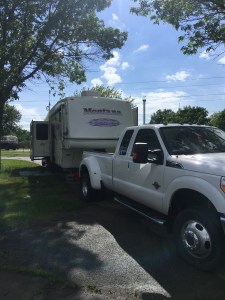
We’ve been living in a 250-square-feet renovated Montana Mountaineer 5th wheel for the past 15 years. Although we love living full-time in our RV – I’m writing this from inside our RV right now – the RV lifestyle isn’t always glamorous. There are several things we dislike and even hate about the lifestyle.

When you live in a tiny home on wheels, things tend to break often because you’re moving around a lot from location to location. Expect to learn some basic woodworking, electrical, plumbing and mechanical skills. If this is something you’re not up for, then you may want to reconsider full-time RV living.

Living in a small space with someone else means you’re living in a small space with someone else! With not much room to move about, it can get a little annoying because you’re constantly bumping into each other. Finding personal space can become an issue. With such a small living area it’s hard to find privacy. You also have to see each other all of the time, which can create more conflict.

If you want to live the RV lifestyle, know that you’re going to be putting a lot more wear and tear on your vehicle. When you’re towing an RV that weighs thousands of pounds, you have to inevitably change the oil and tires more frequently. You’ll also be putting on more miles than the average car owner. This means more repairs more frequently.

Small spaces get dirtier quicker as there’s less room for dirt and dust to move around. Since you don’t want to live in that filth, you’re constantly cleaning. Moreover, an untidy RV just looks cluttered. But on the flip side, it takes much less time to clean your home living in a RV.

When you’re on the road, finding experts who specialize in RV repairs can be challenging. As the RV industry grows, it harder and harder to find qualified people to work on your RV in a timely fashion. And, one that would deplete your bank account. So if you plan on traveling in a RV full-time or weekends, you need to get familiar with all the systems in your RV.

If you plan on living full-time in your RV in cooler climates, then you’re going to have to ‘winterize’ your RV. Skirting your RV so the air doesn’t go under your RV is a must so your pipes will not freeze and burst. We successfully spent one winter in our RV in the Midwest and stayed warm without issues. But, it was not easy nor comfortable.

Mold and mildew are not uncommon issues to encounter with an RV. We often run our dehumidifier or portable air conditioner to dry out the inside of our Montana. Even so, our humidity can still spike, especially if we’re cooking or taking a hot shower.

Depending on your driving skills and comfort level, towing an RV or Montana can be a stressful experience. You can feel the sway, especially on very windy days! But, for the most part, towing our Montana is easy to do as long as you remain focused on the other drivers around you.

If you’re not boondocking or have free places to park, camping fees can add up and get expensive. This is especially true if you’re traveling during the high season or staying for less than a week in the same place. The only time you find real deals at RV resorts or campgrounds is if you commit to spending long-term there.

If you like to have a lot of stuff, full-time RV living isn’t for you. When you live in a small space, downsizing your life is a must. If you have too much, your space will become cluttered. The last thing you want is to end up on an episode of Hoarders.

Every kind of lifestyle comes with ups and downs. Social media & YouTube makes it easy to glamorize living in an RV, Montana or van. But we will be real with you. It’s not always easy living this way. It’s important to know all of the struggles you may face before jumping in. We must say though, even with all the struggles, we love this lifestyle and are so happy we chose to live this way.

We hope our honest insights into full-time RV living gives you a realistic perspective of what it’s really like to live & travel in a small space.

Thanks! Dora & Ed

The Iowa State Fair 2022

Iowa State Fair 2022

The Iowa State Fair ran from August 11th to August 21st this year. The Fair is the single largest event in the state of Iowa and one of the oldest and largest agricultural and industrial expositions in the country. Yearly it attracts more than a million people from all over the world, the Iowa State Fair in Des Moines is Iowa’s great celebration. For 11 days in August, the fair has livestock shows, talent shows, wood carvings, rides and entertainment.

This year some of the highlights included; Brooks & Dunn with a special guest Alex Miller, Kane Brown with special guest Jessie James Decker, Carrie Underwood with Adam Sanders, Nelly, Alanis Morissette, Disturbed, Keith Urban and many more.

Food in general at the Fair is popular, you compete for the coveted title of Peoples Choice and Best New Food. The finisher and OMG Chicken Sandwich recorded a record number of votes and when the votes were in, The Finisher was voted to be the winner.

And….here are the numbers. 1,118,763 total fair attendance. 15,047 attended the Brooks & Dunn concert. 7,300 pounds of food was donated by the vendors to the Food Bank of Iowa. Record one day attendance was set Saturday, August 20th, of course the day we attended, of 128,298 people through the gate. The world record for largest cornhole tournament participates at 730.

Ed and I sure had a great time and we think you would as well. We can’t wait until the Fair of 2023.

Check out todays video by clicking here or click on the picture of Ed & I in front of one of the amazing murals.