Part 3 Another resource on how we find work while living on the road.

CoolWorks.com is a website dedicated to Jobs In Great Places. The service is a great resource for RVers or people that want to travel without a RV.

Seasonal jobs can have a lot of benefits that traditional open ended jobs don’t. The obvious advantage of seasonal work is the ability to travel and make money at the same time. Additionally, seasonal jobs offer you the ability to fully customize your lifestyle to fit your desires.

Your situation may be very different from what ours was, but when we were living in IA finding a job was near impossible. The seasonal job market, however, is very different from a traditional job market. The seasonal job market is very much in your favor.

Seasonal employers face a lot of challenges with hiring. They have a lot of positions to fill, and finding good, employable people who are willing to relocate for a temporary job can be difficult. If you’re willing to move, then you’re almost guaranteed to find a job that suits you.

You can get a job doing literally anything.

When we started working as seasonal workers we came to realize that Cool Works is an excellent way to look for out of the ordinary jobs. There are grocery stores, retail, restaurants, bars, security, health care services, utilities, grounds keeping, etc. Any job that you would find in a regular town.

Social Distancing During RV Travel

Worried About Social Distancing When Traveling?  Many travelers are finding social distancing is easy in an RV.

Although Recreational vehicles were gaining in popularity before the pandemic, the pandemic has forced people to look at a different way to safely travel. When you rent an RV, you are getting a rental car, hotel, and more direct access to where you want to go.  Or if you already own a RV, you have your own safe space with you.  Yes, you will have to stop to get fuel, but you can pay at the pump, so you have not direct contact with others. After using the pump, wash and sanitize your hands.

Now, with travel restrictions loosening, a surge of travelers is drawn to the RVlife.  RV campgrounds & rental companies are reporting huge increases in summer bookings after the industry virtually shut down because of pandemic-related travel restrictions. Spontaneity and freedom are key attractions to travel by RV. But this summer, potentially with more vehicles on the road and Covid-related constraints in parks, some advance planning is required. Though many states still have COVID restrictions, Airstream saw retail sales climb 11 percent compared to last year. RVshare, a RV sharing site, said the number of days booked via its site has more than doubled year-to-date compared to last year.  That is some encouragement for the anticipated surge of new RV travelers who are turning to these homes on wheels to travel safely and maintain social distancing.

Extreme social-distancing seekers may opt for boondocking, or camping without power and water hookups, which is often free in national forests or Bureau of Land Management areas.  You can fill your freshwater tank at home but at some point, you will need to dump your tanks.  Just like getting fuel, once you dumped your tanks at a facility, wash and sanitize your hands.

Many campgrounds & RV Resorts have taken the pandemic very seriously.  Making online reservations or by phone has become more important than ever.  When checking in, parks have taken a few different steps to keep everyone safe.  No contact check-in.  After making reservations either online or by phone, many parks are putting your packet of information outside the door for you to access.  No contact with staff.  If you have any questions, they have a phone number where to reach them.  Plexi-glass windows. Plexi-glass windows or shields have also become quite common in campground offices.  As you may have seen in grocery stores, the Plexi-glass is a type of divider from the staff vs customer.  Such an easy way to keep everyone safe but still have contact with the campground staff.

When making your reservations, be sure to ask if the facilities have max capacity restrictions, altered times, limited use, or closed all together.  As RV parks try to accommodate for pandemic safety, staff may not be in place to clean the facilities after each use.  If you have a self-contained RV, this may not be an issue for you.  But if you are camping in a RV without a restroom this may be a game changer for you.  OR if you are planning your vacation with an idea of a swimming pool or hot tub, depending on the RV park they do not have it open.  It is simply better to ask when making your reservations what is available instead of being disappointed upon arrival.

Ed and I, as full-time RVers, feel confident in the way we practice social distancing while RVing.  As we travel, we stay at least 6 feet (about 2 arm’s length) from other people in indoor spaces.  Plus, we do wear our masks regardless of if it is a requirement to enter a business.  While we are outdoors, we do practice social distancing but are not as concerned.  We feel so much safer having our home with us. We do not have to use public restrooms or eat out. 

Recently I had to take flight back to Iowa for a doctor’s appointment.  I will have to say.  I felt much safer traveling with our RV than being sandwiched between two individuals that I had no idea where they had been.  Yes, we had to wear our masks BUT when you eat or drink or use the restroom you can possibly pass something onto another person.  Step 1 to social distancing: rent an RV or enjoy your RV and get out there. 

Part 2 A few resources that we use while living on the road to find work.

Workers On Wheels, is a great resource for various jobs that are available to people that are RVers or for people that want to travel but don’t necessarily have a RV. Make sure you sign up for their free newsletter to get the most updated job listings!

When planning your travels, call the campgrounds directly to see if they use work campers OR camp hosts. Check out the city website on where you want to go if they have openings that may interest you OR if the cities website advertises for local businesses.

HOW TO STAY SAFE IN AN RV DURING A STORM

Depending on where you plan on RVing, you should form a plan for how to weather a nasty storm.  In any case, the most important thing you should do, is keep yourself updated on the most current weather as much as possible to avoid surprises and prepare yourself for any bad weather that may be on its way if you are not able to escape it.

PLAN AHEAD

As with any emergency, you want to make sure you are prepared ahead of time. Create an emergency plan for every situation and make sure your family knows the procedures. Write out the procedures and have them either posted or stored somewhere for easy access in your RV.

Before heading out, research what the weather will be like in the places you are traveling. Two of the nastiest weather phenomena, tornadoes and hurricanes, occur in the United States from spring to late fall. There is not a specific “season” for tornadoes, but they occur most often during the spring and early summer. They mainly appear in the Great Plains, the Midwest, the Mississippi Valley and the South. If you are traveling through states like Oklahoma, Kansas and the Northern parts of Texas, Alabama or Mississippi, make sure to keep an eye on the forecast.

Hurricane season starts on June 1st and runs until November 30th in the Atlantic Ocean. However, most storms appear during the peak season, which runs from August until October. Hurricanes can hit anywhere along the gulf and east coasts, with Florida, Texas and Louisiana having been hit by the most hurricanes over the past 150 years. Unlike tornadoes, hurricanes are forecast well in advance of landfall, leaving people plenty of time to evacuate or prepare.

Besides hurricanes and tornadoes, thunderstorms are the other serious form of weather that RVers can find themselves caught in. Spring and summer are when thunderstorms are most likely, with most occurring in the afternoon and evening. Many do not pose a significant threat unless they are categorized as “severe,” in which they have one or more of the following: Hail larger than one inch in diameter, a tornado and winds above 57 mph.

HAVE THE RIGHT TOOLS ON HAND & A GRAB BAG IN PLACE

Prepare an emergency supply kit/grab bag and place it somewhere in your camper that is easy and accessible. In your kit you should include: a portable weather radio, extra blankets, rain jackets, non-perishable packaged/canned food, can opener, flashlights, batteries, a flare gun, fire extinguisher, a first aid kit, small tool kit, necessary prescription drugs, pet supplies/food, bottled water, etc.

When bad weather takes out cell phone coverage, internet, etc., sometimes radio stations can be a big help. The NOAA (National Oceanic and Atmospheric Administration) and NWS (National Weather Service) provide all of the information you need to know for updates, incoming storms, and emergency radio station lists. If you have mobile coverage or internet during a storm, these are great resources for your safety. If not, it would be wise to jot some of the radio stations down if you know a storm is coming. Keeping a weather alert radio in your RV is a smart decision as well.

HAVE AN EXIT STRATEGY

If you find yourself caught in any kind of severe storm, make sure to have an exit plan for how to get to safety. If you are camping or at an RV resort, DO NOT try to ride out any type of severe storm in your RV. While they may seem sturdy, they do not have a foundation and can be blown over by strong winds or swept away in the event of flooding. Look for the nearest solid structure if a tornado or high winds are present. If flooding or a storm surge is imminent, seek high ground immediately.

For weather that falls below “severe” but is still serious, make sure to prepare your RV for riding out a bad storm. If you are at a campground or resort and have outside decorations or accessories lying around, bring them inside. Make sure any outdoor attachments like an awning, grill or TV are secured. Check your insurance to see what will be covered in case of any incidental damage that may occur during a storm, like a tree branch damaging your roof. Keep your emergency kit handy in case you will not be able to leave the area for an extended period of time or if your power hookup will be damaged during the storm.

RVING WITH PETS

Be sure to include your pets in your emergency plans as well. Keep a leash around, and keep them collared and ID’ed at all times. Familiarize them with their carriers and cages so they will be more willing to cooperate with confinement if the need to carry them arises. Check out our blog post for more Tips for RVing with Your Pet.

Hopefully you feel a little more prepared for bad weather while RVing after reading these tips! Let us know of any other suggestions you may have for other RVers! Enjoy your trip, and safe RV travel, no matter what type of weather you encounter.

Boondocking OR Beach-docking?

We had never boondocked before and were extremely nervous about doing it.  Could we make it without shore power or hooked to city water?  Could we boondock without solar and lithium batteries?

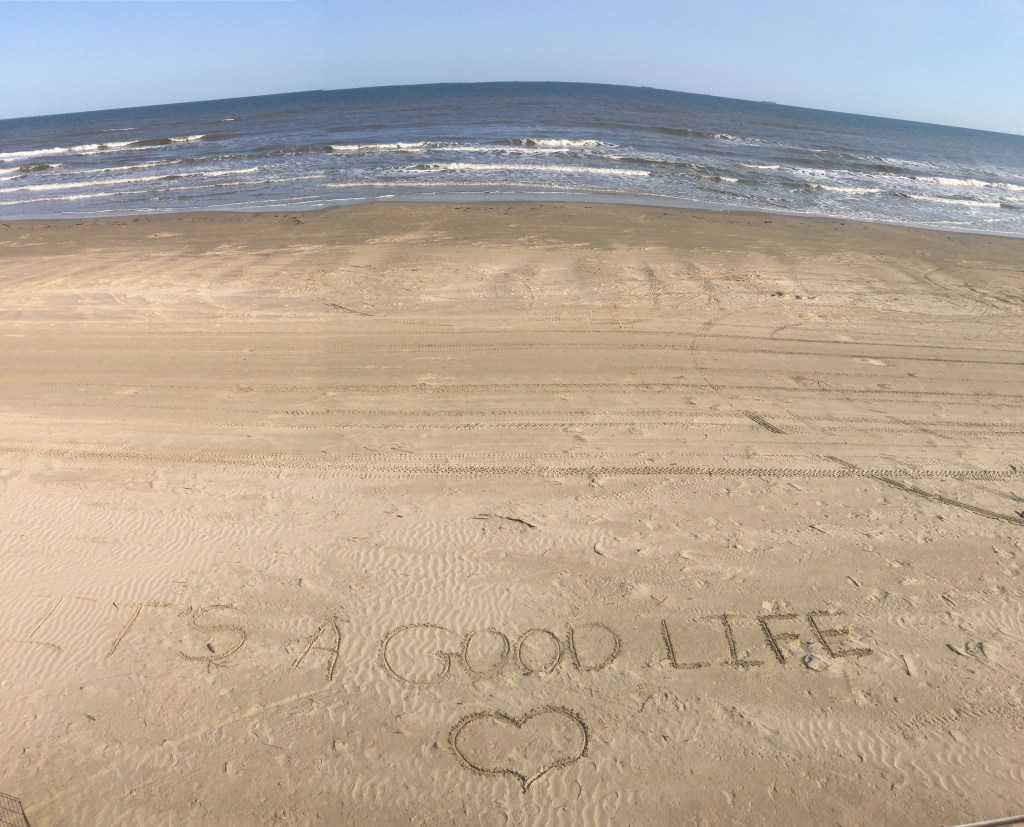
After the artic blast hit Texas and how we made it through that, we decided we needed to just do it!  So, we packed up and made our way to Brazoria Beach near Surfside TX.  When first arriving, we were cautious on where we drove and tried to stay as close to the dunes as possible.  We have heard of people getting stuck on the beach because of high tide and we did not want to be one of those people. Strong winds or storms can significantly elevate tides and create hazardous conditions along the Gulf Coast. Considering that we were also towing the car we were slow in picking our camping spot.  But we soon realized that the beach was hard packed sand as long as if you did not get too close to the dunes.  Also, after talking with the locals, the time of year we were there was common for low tide.  We highly recommend this beautiful beach (for Texas) because who does not love camping on the beach for FREE! 

We made it 4 nights before we HAD to leave to make our way near San Antonio TX so Dora could fly back to Iowa for a doctor’s appointment.  If we could have stayed longer on the beach we would have, and we are looking forward to going back.  You too can do it if you do some preparation. 

In our upcoming video Sunday, March 21 2021 we share with you our experiences while Beach-docking.

Other Beach-docking options:

We have compiled a few other boondocking options that we would like to share with you.  Many Texans flock to the beaches of South Padre Island to escape the summer heat.   But there are less-crowded beaches just a little farther north, where RV camping on the beaches of the Gulf Coast is permitted. Better yet, camping is either free or included with a low-cost entry pass.

Of all the free beach camping, Padre Island National Seashore provides the best opportunity to get away from it all – tune out the world and tune in to nature. At 60 miles long, this beach is the longest, remaining, undeveloped barrier island in the world. The beaches are beautiful and the surroundings all natural. Entry is $10.00 for a one-day pass or $20.00 for seven days.

Once in the park, follow the road past the visitor center to the beach camping area where you can camp for free. You may stay for 14 consecutive days and then leave for 48 hours before returning for a maximum of 56 days per calendar year. Just fill out a registration form for your vehicle at the entry kiosk when you arrive.

The farther down the beach you drive (usually conditions allow about 5 miles by regular two-wheel drive vehicles), the farther you will be away from any other people if that is what you are after. You will need to check beach driving conditions and be aware of the tides. This is true whenever you drive on a beach. We’ve seen others camping here several times in large fifth-wheels and even a few motorhomes.

Port Aransas requires a $12.00 annual beach pass is required to park anywhere on the beach except within the I.B. Magee County Park boundary. The pass is sold at the county park visitor centers, the local grocery store, and local convenience stores. It is a shame to have to pay to park on the beach, but it’s not so bad when you realize the pass also covers you for three nights of free camping anywhere on Port Aransas beaches with the exception of I.B. Magee County Park.

You can expect a lot more traffic than at Padre Island National Seashore, but the beach road is extra-wide, hard-packed, and maintained. On the main beach, the parking area is far enough back that you should not fear soft sand or the possibility of waves licking at our tires at high tide. Any size of RV should be fine here. If you prefer to drive and camp closer to the ocean’s edge, you can do so south of Beach Access Rd 1. Small campfires are permitted on the beach between beach markers 0 and 62.

Magnolia Beach is approximately 12 miles southeast of Port Lavaca. Located on an oyster-fishing bay, the beach is covered in broken shells – not the fine sand of the beaches of Port Aransas and the National Seashore. No matter what size of RV you are in, you should feel comfortable parking on this firm surface rather than the softness of a sand beach.  This beach can be remarkably busy with RV camping so if you want more a secluded area, this beach may not be for you.

 In the paved camping area, facilities include covered picnic tables, garbage cans, and public restrooms. The beach is clean and, although the restrooms are generally not very well maintained, they do have running water.

You can only walk the shoreline for about a mile before private property signs get in your way, but this shoreline is still relatively untouched by developers and tourism. It is a bit of a hidden gem and, so far, there is no fee or permit required to camp here. Although there is not a posted stay limit, we have been told that if you appear to be settling in for the long haul, you will be asked to move on.

Is Our Truck Totaled?

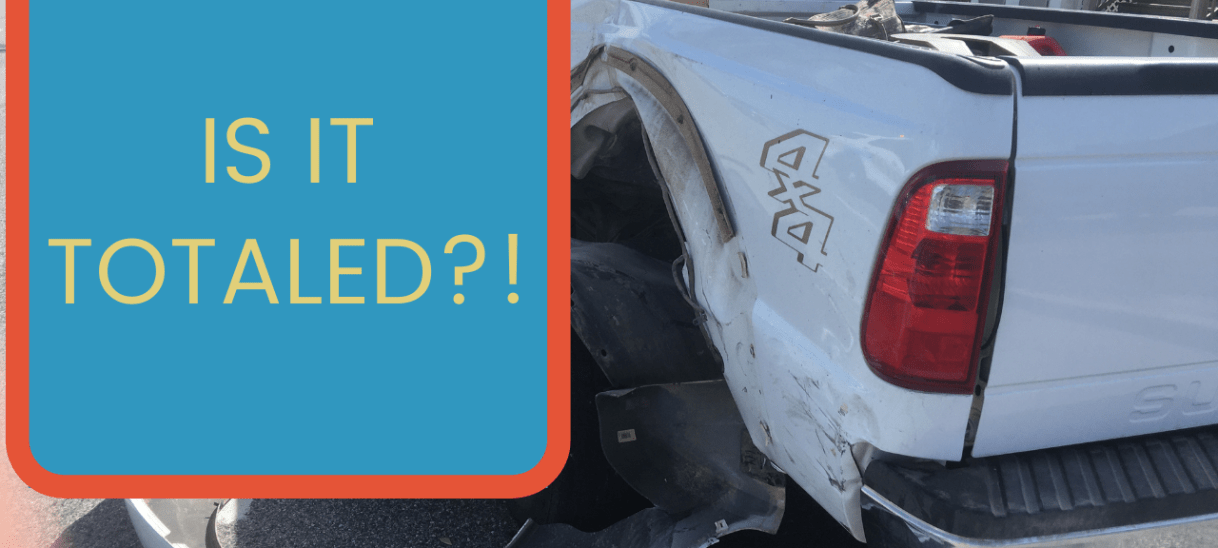
We’ve had so much going on in our lives these past few weeks. Our job assignment ended near Shreveport, Dora flew to Iowa for a doctors appointment, we began our downsizing process and sold our car this past Thursday. THEN on Friday we were hit by car while in Galveston causing major damage to our truck. Now our only vehicle. As I am typing this post, our insurance company has dispatched a wrecker to come pick up our truck from a tow yard and transporting it to Houston to a auto body shop. We will keep you updated on the progress.

Make sure to watch the video so YOU can learn from our mistakes.

How to find work while living the RV Life Pt.1

So many people these days are thinking of quitting their full-time jobs that require them to stay at home in one place. Instead, they want to hit the road full-time in an RV or campervan and live an adventurous lifestyle. We are doing a series of videos showing you what WE do to find work while living on the road.

Perhaps you’re considering a full-time RV or campervan life. But if you’re not independently wealthy, retired, or otherwise financially stable, you’re likely going to need a job. You may not know what types of employment options are available to you on the road. To help you come up with options for an income, we reviewed a few options online to determine what types of jobs people have while traveling full-time. In todays video we show you one of the options that we use to find jobs while living the rvlife.

RV Terms Glossary

Just like any type of culture or lifestyle, RVing has it’s slang terms that can often be confusing to those who are unfamiliar, or new, to RV living and camping. We have compiled a list of some of the more popular jargon term used by frequent RVers.

Did we miss some? If you are aware of terms that should be included here, please feel free to let us know at itsagoodliferv@gmail.com