
Can you RV during the winter months?

Considering our latest experience of RVing during the Polar Vortex, we thought we would share a few tips on how to survive in your RV during the winter months.

Summer may be the most popular time for road trips, but that does not mean you have to pack up your rig at the first site of a snowflake. RVing in the winter is a great way to experience a wide variety of outdoor activities, from skiing and snowmobiling to simply meandering around in winter wonderland, cup of hot cocoa in hand.

You may be wondering, however, how to keep a RV warm in the winter. After all, even the best-made rigs on the market have significantly less insulation than a sticks-and-bricks home. And just like your sticks-and-bricks, RVs have a variety of items that can be damaged by the freezing temperatures.

RV winter living is all about one thing: preparation.

If your not prepared, you will experience big problems. Your RV’s pipes can burst just like the ones at home, and the cold weather is killer on your RV batteries. Even though many four-season RVs come with thermal packages, which include extra insulation, it’s still not enough for extreme cold weather RVing in sub-zero temperatures. If you’re camping in extreme cold, put your RV in a skirt! Skirting the RV will keep the battery bays, plumbing, and other important components warm. We spent a winter in Iowa and put a skirt around our RV but also placed a small heater under the RV to keep it above freezing.  If you don’t have a skirt, you can pack snow around the RV bays.  We do not suggest hay or straw bales being placed around your RV because of rodents and it’s a fire hazard.  But if you travel for work like we do, do you best to keep the furnace running to keep that RV belly warm so the pipes don’t freeze. 

Some of the most important items in your RV is deep in the underbelly: the tanks, batteries, and plumbing. While skirting can help, you’ll also want to wrap your pipes in heat tape and invest in a heated RV water hose, so as to avoid having your water line freeze if you’re hooked up to a city water connection. If you don’t want to upgrade to a heated hose, you can also add insulation or tape to your existing water hose or fill your onboard freshwater tank and use that as a water source instead.

RV windows lose a ton of heat, no matter how insulated the manufacturer claims they are. There are several ways to insulate them: foam insulation boards, relectix, bubble insulation, solar blankets, etc. For extra warmth, line your windows with heavy-weight thermal curtains. You may also want to go over your RV windows and doors with a layer of RV sealant or caulk, just to ensure they’re nice and weather-tight.

There’s one major area of confusion many RVers face when RVing in the winter, and it’s all about the HVAC system. Many rigs have both a “heat pump” that’s built into your AC unit and an onboard furnace that uses propane. We feel the heat pump can be used UNTIL you are experiencing freezing temperatures.  You need the onboard furnace to run during these times, so it heats the belly of your RV, keeping the plumbing warm and toasty.  Now with that said, we use the heat pump and furnace to keep us nice and toasty inside however, we do run the furnace to ensure the belly temperature stay above freezing.  While your furnace does utilize propane to burn, it’s more efficient at warming a space quickly. Which means that if you’re planning on living full-time in an RV in winter, you need to ensure you’ve got plenty of propane. When you’re out of your rig for the day, be sure to leave the thermostat set to switch on your furnace if the RV reaches a certain temperature — it can be pretty cool, if you don’t have pets waiting, but you don’t want your pets to freeze inside while you’re away.

Now that we’ve covered the basics for keeping you and your RV warm, let’s talk about what RV is best for RV living.  Although many RVs are advertised as four-season or insulated, not all rigs are created equally when it comes to living in an RV for the winter.  The best RV for winter living is one that’s fully self-contained and as insulated as possible, perhaps even with some extra, after-market insulation added. Large motorhomes and trailers may be constructed out of sturdier, more weather-proof materials, but on the other hand, a smaller motorhome or trailer may be easier to heat, since there’s less internal living space.  In today’s RV market there are particularly large, luxurious RVs — offer fireplaces, which can be a welcome addition for those planning on extreme cold-weather traveling. And no matter which rig you go with, you’ll want to ensure it does have an onboard furnace, since, as discussed above, the HVAC heat pump or fireplaces won’t cut it below freezing.

Here are some more quick tips and tricks for winter RV camping

Many RVers drain their freshwater tanks completely for the season. That means bringing bottled water for brushing your teeth and doing the dishes.  However, if you’re a Full-Time RVer this may not be possible so we suggest installing tank heaters for those freezing temps.

The bay that holds your tanks must always be kept above freezing. Mini space heaters are inexpensive and use very little amperage. Buy one and stick it in the bay.  Just be safe!  They can easily cause a fire.

Use RV antifreeze in your plumbing and gray/black tanks. You can do this by flushing antifreeze down the toilets and pouring it into your drains. That said, you do not want to introduce RV antifreeze to your freshwater tank or water heater!

If you do choose to use water hookups, make sure you insulate the pipes with heat tape. You’ll also need to insulate any connections and exposed piping.

Never allow your black tank to freeze unless you want to deal with a disgusting mess. Use a PVC pipe for your sewer hose – it’ll have less chance of freezing than a regular hose. If you plan on leaving the tank hooked up, add a layer of insulation around the sewer pipe. However, it’s a good idea to keep your tanks closed until it needs to be dumped.  Don’t leave your black or gray water valves open if you’re camping in a spot where you’re connected to the city sewer. Why, you ask?  Poopsicle!

Your never too dry.  Even if your hair sticks up when brushing your hair

Cold and wet is bad. Not just for you, but for your RV, too. All that heat in one confined space can lead to humidity and condensation, which can cause mold in your walls.

Vent covers are great for two things: they help prevent condensation, and they keep you warm. Lots of warm air escapes out the vents in your RV. A cover adds an extra layer of insulation. The best part is, you can still open the vents even if there’s snow on the roof.

We hope you learned a few things in this post. So get out there.  You’ll see some beautiful, unique sights along your winter RV trip. There’s nothing quite like being in the solitude of a winter campsite, watching the snowfall and blanket the land around you. Make sure you follow the tips we’ve included here to stay safe during your winter adventure. Remember, warm and dry, not cold and wet!
Living in a RV during Winter – No Running Water – The Generator Died

As full-time RVers & gate guards in Texas, we work in remote locations and run off a diesel generator, use a portable freshwater tank and an external tank to dump our tanks into.  Well, the Polar Vortex hit the state of Texas hard.  Parts have seen snow & freezing rain that have not seen this type of weather for years.  Since this is not a normal occurrence in Texas, many people and companies have been caught off guard.  The rolling black outs, water in cities shut off trying to conserve so that everyone can have access to the items we just take for granted.  When I wake up in the morning I like to jump right into the shower. 

Well…with the Polar Vortex took that luxury (?) away from Ed and me.  Our water, we hope, is frozen at our portable freshwater tank and we have not split pipes inside our RV.  We initially did the “water circulation” method that had been recommended to us.  Ed found the water had stopped so when investigating he found a piece in our freshwater connection had broken causing the water not to circulate.  Well yes, the part was broken however after Ed did the repair, thinking we were good, the water froze in the hoses.  The “water circulation” method did not work.  Possibly it would have if the temps had not dropped so severely.  But then we decided to fill our fresh tank and run off our RV fresh tank until the temps warmed up.  Approximately every 30 minutes we would run our water to keep things moving inside the RV hoping not to freeze the pipes.  Well, when doing that, I think, well we hope, that our RV freshwater tank ran out.  Our gauge reads empty, so we are hoping and praying that it is true and that the cold temps have not turned our tank into a block of ice. 

Ed removed the plug from the freshwater tank, drained our hot water heater and opened all faucets to remove any excess water in the lines.  We are hoping once the outside temps get above freezing, we will find the external freshwater tank was the issue & our pipes and tanks are fine.

It is interesting and challenging BUT what has come out of this situation so far, Ed said; oh, heck now, I know we can boondock.  Gotta love him.  Now warm up so we can go boondock on a warm beach.

At our second day, during my shift, I woke Ed up early because our commercial generator, that is provided by the company we are working with, started surging.  Since we grew up in Iowa, we knew what the cold weather does to diesel if not a winter blend and/or anti-gel put into the fuel.  Yep yep our generator was gelling up and shut down.  We thought our company support man had put anti-gel in the fuel, but he had not.  Our support came from Fort Worth, which is approximately a 3-hour drive but considering the road conditions it took him a few more hours to arrive.  During that time Ed was able to get our personal generator running so we could run the furnace and portable heaters. Our support arrived with anti-gel and additional fuel filters.  Thankfully, it did not take our support and Ed long to get it running again.  Cross our fingers as I type this, the generator is running fine and we are warm. 

After I (Dora) got 4 hours of sleep, we got permission from the site supervisor to leave our gate unsupervised, go to town to refill our propane tanks and find a truck stop to shower.  The 2nd day of no shower sure makes a person feel yucky.  It was difficult to find propane as many companies were out.  Luckily, we found one place that had not run out yet.  As Ed states in the video, we believe they changed an outrageous amount, but he had us.  We needed propane.

Once our propane tanks were filled, we decided to go to Walmart to get more gallons of water.  Boy oh boy were we shocked when the shelves were empty.  They had flavored waters but who wants flavored water to use to flush with or in your coffee.  We left empty handed but felt ok because we can use a bucket to get water to fill gallon containers out of our external freshwater tank.

After leaving Walmart empty handed, we sat in the parking lot calling several hotels to see if we could rent a room OR if a pool area had a shower so we could get cleaned up.  That too was a bust.  The cheapest shower was going to be $120 because we had to rent a room.  Well, my budget, or anyone’s budget, should not allow a $120.00 shower.  We started calling campgrounds to see if we could pay them for 2 showers.  Our first call was met with a genuinely nice southern woman.  We explained our situation and she said, oh yes dear, the showers need renovated yet but your more than welcome to stop in and get your showers at no cost.  Yes, they were not the best condition, but the water was HOT.  Ed and I both felt like a million bucks.  A big shout out to Miss Ellie’s RV Park in Waskom, TX!

During our drive back to the job site we enjoy some beautiful scenery AND a few deer.  The ride back was wonderful.  I guess a good shower can give you a new lease of life.  #itsagoodliferv  Since this video is in real time.  I guess we will see how much longer before the crew gets back to work and we have running water.

What Does It Cost to RV Full-Time? Is it affordable?

Image result for affordable rv living

The biggest question most people have before they run away to live in an RV full-time is: Can I afford it?

When we first started talking about RVing full-time, we had no idea how much it cost to live full-time in an RV. Was it going to cost more than living in a house? Was it going to cost less? How much would we spend on gas a month? We had no idea. If you are thinking about RVing full-time and wondering if you can afford it, this post is for you.

Living and traveling full-time in a RV is of course not free, but we were surprised how affordable it can be. You actually have a lot flexibility when it comes to expenses – depending on your budget and how you like to travel.

People enjoy the full-time RV lifestyle on all kinds of budgets, and the money full-timers have to work with comes in all kinds of forms. Some retirees have big pensions but not a lot of savings. Others have a nest egg of savings but no pension. Many younger full-time RVers work while they travel, either to cover all of their living expenses or to supplement other income streams.

We hope you find todays post helpful to anticipate some of the costs of full-time RVing.

Full-time Campsite Budget

Think of campsites like your mortgage or rent. Campsites are, in my opinion, where you can either spend the most money or make full-time RVing cheaper than “normal” life because there are so many options. Depending on your budget and camping style, you can stay in RV parks, State Parks, on free Boondocking land, or utilize RV Discount Clubs.

RV Parks

RV Parks with full-hook ups (electric, water, sewer) will cost on average anywhere from $30-$90 a night. Many provide showers and other great amenities, which has nothing to do with the budget but sure is nice.  Average Monthly (which can vary greatly): $400 – $1,600

State Park Campgrounds

State Park campground fees will vary by state and what is offered. We’ve been found State Park campgrounds with partial hook-ups (electric, usually water) anywhere from $15-45 but have dumpsites available on the premises.  We found most state parks do not allow monthly stays.

Boondocking

Boondocking is basically camping at free spots without hook-ups. Several State Forests and BLM (Bureau of Land Management) locations have free dispersed camping. Typically, you can stay in one location for a maximum of 14 days. We have also found a few state parks have free campsites. While this option is free, you do have to find and pay for dump stations.  Monthly: $0

RV Discount Clubs

There are several RV Discount Clubs out there that allow you to pay an annual fee to camp at various sites. For example, there is Boondockers Welcome which costs us $50 a year. You are able to stay with Boondockers Welcome hosts throughout the country for no additional charge. Another option is Harvest Hosts which starts at $79 a year. We’ve haven’t tried this one yet, but it looks awesome!  With either option, spend a few nights a month at different locations and it pays for itself after a few nights.

Our Monthly Campsite Budget

We budget $450 a month for campsites, but that is because while we are working, we are provided free onsite generator, water & sewer onsite. It works great for us – it’s free!

Full-time RV Gas Budget

Honestly, I’m not sure if there’s a way to generalize the gas budget, since gas prices, gas mileage, and the number of miles you travel varies so much. However, we do recommend a discount fuel card if you use diesel.  A TSD Fuel card has been very helpful to keep our fuel costs down.  We budget anywhere from $300-$500 a month depending on how far we travel, the fuel prices and how much driving around we do in our tow-behind car.

RV Insurance

Since our RV is our home, we upped our RV insurance when going full-time.  If you are living in your RV rather than just taking vacations, you will need specialized insurance.  We recommend doing some research on providers and finding out exactly what you need. Our RV insurance is $54 a month.

RV Maintenance and Repair Budget

If you’re planning to RV full-time, just know things break – often. This isn’t to scare you – full-time RVing is totally worth it, but just be prepared to spend $50-100 a month on repairs or maintenance. Thankfully, ED can fix most things on our RV, so we just have to buy the parts. Depending on the condition of your RV and your handiness, you may need to adjust this number.

Remember, you’ll also be putting some miles on your RV or Tow Vehicle, so oil changes and regular maintenance should be in your budget.

RV “Utilities” Budget

While you may no longer have a water, sewer, or trash bill, you may need to include utilities in your budget. Since we are provided a site during our work assignments over half of the time, we only budget $75 a month. This too will vary greatly.  Some campsites your rental fee covers the cost of all utilities however, some monthly sites charge electric.

Cell Phone + Internet RV Budget

Before we hit the road, we upgraded our cell phone plan to the Unlimited Plan with AT&T but later got rid of those plans and now use Straight Talk utilizing AT&T towers. We saved appropriately $60 per month by doing this.  Between both of our phones we pay $110 a month with unlimited data however only 15GB of data on our hotspots.  So, we purchased another phone plan through a third-party vendor that allows us to use the hotspot with unlimited data.  The cost of that plan is $45 per month.  Our monthly costs for both our cell phones & internet phone is $155.

Full-time RV Laundry Budget

Laundry budget. This is our least favorite chore – even before full-time RVing and we do have a washer/dryer combo in our RV.  But the larger items such as our bed quilt, we have to pack everything up and go to a laundromat, it’s really not our favorite. But it must be done. Some RV parks will have washers and dryers onsite, but if you are on remote jobs sites or boondocking, you’ll find yourself at the laundromat.

If you can find a place that has the industrial size washers and dryers, then you’re in luck. You can wash several loads in one machine. If we are washing clothes, bedding, towels, and the dogs’ stuff, we spend about $18-20 to wash and dry it all.

Propane Budget

We really weren’t sure how much to budget per month for propane. We read online that you can spend $40 a month, so that’s what we originally budgeted. Luckily, we don’t spend anywhere close to that. We refilled our propane tanks approximately 2x’s a year.  We only use propane for cooking, our refrigerator as we travel, and if its super cold out and our electric heater cannot keep up, we do run our furnace.

RV “Fun Money” Budget

This totally depends on what you want to do for entertain and fun while full-time RVing. Our fun money budget is way less on the road. This for a few reasons:  We eat out way less on the road than we did at home.  We can go explore or hike for free versus paying for entertainment.  We do spend fun money on is the occasional dinner out, park fees and drinks if we are meeting up with someone.  Your monthly budget is up to you!

Normal Living Expenses

Normal living expenses include food, cleaning supplies, toiletries – all the non-specific RV items you already pay for. This varies from family to family and should not change too much from your current budget. Except there is a lot less space to clean meaning fewer cleaning supplies!

Hit The Road

As you hit the road you may find several ways that you can reduce your overall monthly costs. However, on the flip side, you can live a luxurious life on the road, too.  More and more RVS are being designed for full-time living and offer many of the same features that houses do.  You can also find RV resorts all over the country that make you feel like you are at a 5-star resort.  Obviously, this will all come at a higher price.  We strongly believe that full-time RVing can be as expensive or inexpensive as you make it.  While it may take some discipline and extra planning, there are a ton of ways to save money on the road and therefore make RV Life affordable and achievable.  So, get out and get started today.  You will not regret it.  It’s A Good Life!

We’ve Moved On .. Honey Do List.. Working on the Road

Working on the road as a full-time RVer can be exciting, adventurous, profitable AND stressful. With every job there are pros & cons but when you work from your RV (HOME) it puts a different twist to things. As your working, from your RV (HOME) things around you may breaj but since you are already (HOME), you may not have the time to do those repairs. So, when an assignment ends you have to take that time off to do those repairs, stock up supplies and food for the next assignment.

Sundays video is just that. Time off, getting repairs completed and having a bit of fun while doing it.

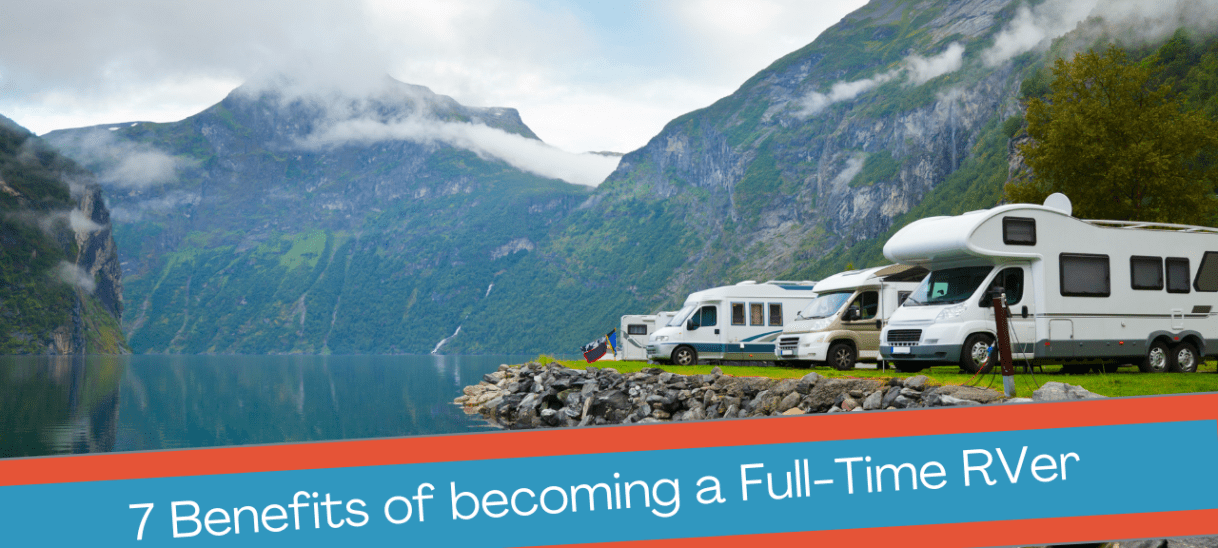
7 Benefits of becoming a Full-Time RVer

Traveling the country like modern-day nomads, full-time RVers lead unique, enriching lives. While the idea of trading your house for a small camper doesn’t immediately appeal to everyone, more and more people are considering—and pursuing—a life on the road. From couples spending their retirement traveling to young families starting a new life together, full-time RVing is a growing trend across many different demographics. Every RVer has their own reason for hitting the road, but there are a few common perks that everyone experiences. Here are seven incredible benefits of becoming a full-time RVer.

The Cost

An RV lets you live without a mortgage or monthly rent. However, you will either pay campground fees or you can choose to boondock.  Boondocking you will have to consider how you will be doing it.  Running appliances on propane?  Solar?  Or will you be running a generator?  Staying in a campground rates will vary depending on where you travel, what time of year you’re there, and how long you’re staying. If you plan it right, you can easily stay under the average cost of housing or rent. Your utility bills will also be much cheaper—if they’re not already included in your campground fees. You also have to think about gas and other regular expenses like groceries. However, it’s just as easy to make a budget for your RV as it would be in any other home. With the proper planning and financially responsible habits, you can turn your RV into a much more affordable option.

No More Living in a Rut

Some people find comfort in staying put in a sticks or bricks home, while others feel restless or uneasy with it. If you’re part of the group that likes to be moving, a full-time life on the road might be perfect for you. In an RV, you never feel tied down to one place. When you feel bored or getting the ‘hitch itch’, you can simply pack your things and drive to a new place. You can change your home and neighborhood as often as you want or need. Does the snow and cold of winter get you down? Drive south and spend the season in warmer weather. Have you had your fill of the beach? Head on over to the mountains for a few weeks. On the other hand, if you ever crave more permanency, you can park your RV and set up camp for as long as you want. Every day of the year, you get to decide where you live and how long you stay there.

Jobs on the Go

Once upon a time, you would need a retirement fund or a massive amount of savings to leave your old life behind and live comfortably on the road. These days, with the internet and more remote job opportunities, anyone can find an enjoyable way to earn an income while traveling. Of course, there are plenty of side jobs in the campgrounds and towns you wander through. However, many people are finding remote work as bloggers, photographers, online tutors, and more. You can run an online store, produce a travel YouTube channel, or work as a freelance artist for pretty much any company imaginable. There’s no end to the unique jobs that can lead you to an adventurous RV life.

The Great Outdoors

This may be one of the greatest benefits of becoming a full-time RVer. As with any RV trip, life on the road gives you plenty of opportunity to enjoy the natural beauty around you. Spend lazy mornings in the comfortable shade of your RV awning or exciting afternoons hiking through woods and mountains. If you get tired of the environment, you are in, you can simply leave and pursue the next great landscape. Even though Ed & I work full-time while on the road, just being able to pick up and change the view outside of our windows and to be able to experience the country is one of our favorite things.

The Friendly RV Community

If you think the lack of neighbors can get a little lonely, think again. There is a warm RV community spread across the entire country, waiting to welcome you with open arms. No matter where you wander, you’re sure to run into other couples and families living their best lives on the road. You’ll meet kindhearted neighbors and even lifelong friends. Swap stories, share advice and recommendations, and lend or receive a helping hand. The sense of community between RVers—especially full-time RVers—can enhance your travels everywhere you go.

The Excuse to Simplify

Many of us long for the chance to declutter and unplug from a lot of the hectic routines of our daily lives. Switching to the full-time RV life might mean downsizing, but it’s also a chance to simplify your life. If you feel like you’re suffering from unnecessary modern worries like too much screen time or the routine of an office job you don’t enjoy, RVing is an excuse to let some things go. Whether that means spending less time online or simply learning to live in the moment, becoming a full-time RVer might just be the drastic life change you’re looking for.

You Never Stop Traveling

Do you have a map hanging on your wall, marked with all the places you want to visit? Have you written a bucket list full of incredible destinations you want to see some day? Full-time RVing is the perfect way to relieve your wanderlust. With the road as your home, adventure is always available to you. This is a great way to see what the world has to offer, all from the comfort and familiarity of your own home. While living in an RV full-time certainly isn’t for everyone, it was definitely made for those of us who love to travel. If the open road calls you, this might just be the perfect way to answer. 

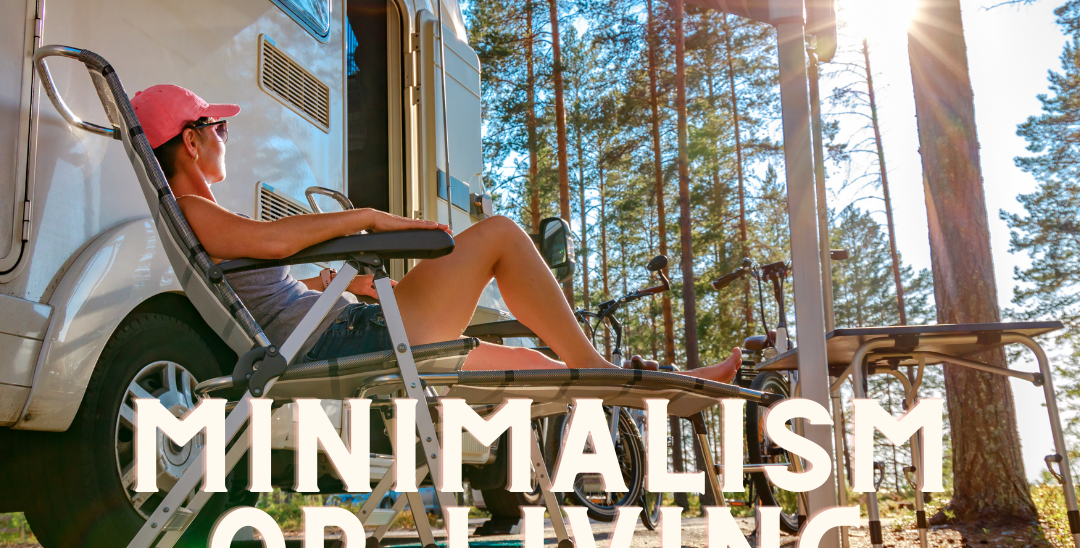
Minimalism OR Living Simply

Is living in an RV considered a MINIMALIST life or a similar lifestyle called SIMPLE LIVING?  We think so. 

Minimalism OR living simply, is a lifestyle in which you reduce your possessions. There is no official definition of either, and in fact they are actually whatever you say they are. Our understanding of minimalism is that each person pares down his/her life to the absolute minimum they think they need to live happily and comfortably with.  We know many RVers who have much less stuff than we do, and others who have much more. They carry things we don’t consider necessary, and we carry things they don’t consider necessary, but we are all minimalists, since we each have gotten down to what we think is our minimum amount of possessions. Believe me, it is an ongoing experience. On a regular basis we go through our RV and examine everything in it to decide if it really is necessary. Every item has to justify the space and energy it takes.  Ed and I have found the longer our wheels stay put – the more objects find their way into our home.  Once this happens, we must go through a purge to get rid of the CRAP.

You do not need a bunch of STUFF to make you happy.  We used to think that the more we have, the happier we will be.  When you convince yourself this, you surround yourself with useless CRAP and spending the money that you could be using for EXPERIENCES. So we say goodbye to a lot of things, many of which we had for years. And yet now we live each day a bit happier. Think about how much better your life would be if you could get rid of so much stuff you could move into a RV.  Ultimately, all we have is our time, it is the most precious thing in our lives, and we squander it away by buying and warehousing more-and-more stuff. 

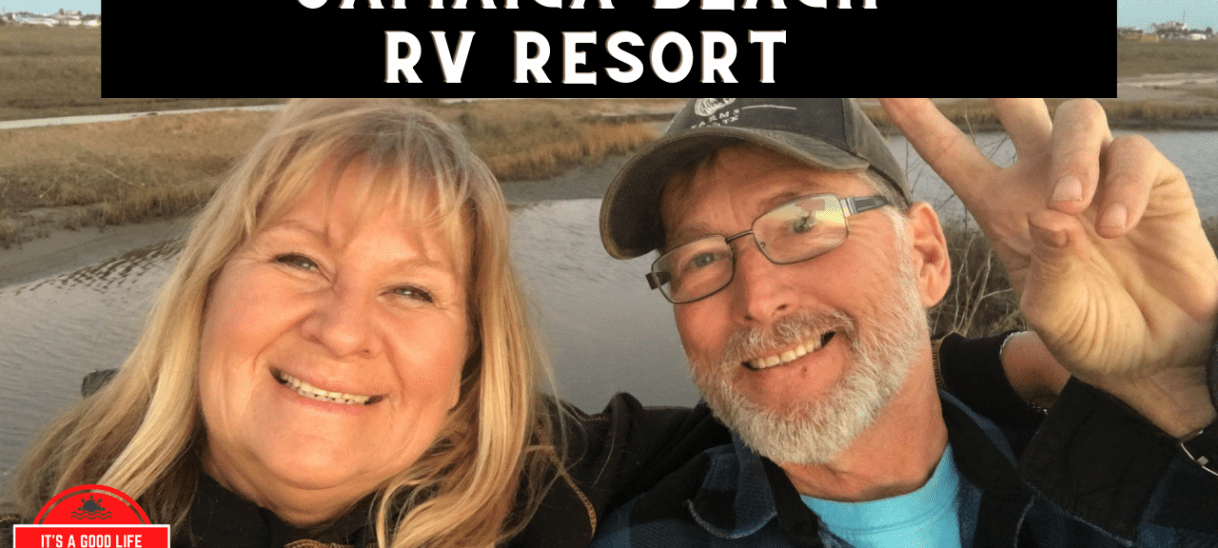
Jamaica Beach RV Resort

We really enjoyed our stay at Jamaica Beach RV Resort, Galveston TX. The staff is top-notch and friendly. Management listens to their customers. Owners are constantly upgrading the resort. A heated pool is currently under construction. There are two pools (one with a hot tub), an adult indoor hot tub, which is the size of a small pool, splash pad, and a lazy river. Miniature golf is also a ton of fun. Landscaping is awesome. Sites are roomy and well-maintained. There are several activities for adults and children. Walk to the beach on the gulf side or a concrete paved walkway to the water on the bay side.

Looking for ways to make money while traveling?

We’ve met many amazing people while RVing. Some are retired, but others are like us and also trying different things in order to make their traveling dreams a reality by making money while traveling on the road.

Everyone does something a little different to make money while traveling.

So, yes, it is possible to make money while traveling full-time! In fact, there are many ways for anyone to make money on the road.

This factor is something that holds many potential full-time travelers back, but it shouldn’t! Don’t let making money on the road hold you back from living your dream, because even though it may seem big, it’s something that can usually be worked around.

One of the first questions we are asked as a full-time RVers is what we do for money. Some assume we are retired, but most are blown away by the fact that working while traveling is such a possibility.

There are many ways & options to get paid while living in your RV. In todays post we talk about one ways we’ve found to make our income. The bulk of our income has been from Gate Guarding. As a Gate Guard, we are contracted by a oil company to log & monitor the traffic that comes and goes onto a site. These jobs can last from a couple of days to months. We enjoyed the flexibility and income that comes along with these jobs.

But, as remote working or unconventional jobs become more popular, there will be new developments and ways to earn money where- and whenever you want to. Never give up living on the road.

How To Make Money While Living On The Road – (Gate Guarding)

What is a Gate Guard and How do we get started?

A Gate Guard guards or is stationed at a entrance of a oilfield location, warehouse, or other property to control traffic to and from the grounds. Depending on each job site requirement, you may sign & sign out approved employees using paper logs or a iPad, possibly taking payload pictures and/or truck pictures during the sign in process, take temperatures with a device provided, directing traffic and insure people entering the property have proper PPE’s. OR other duties as assigned. The reason I say that is many of the sites are on private property and owners have their own requirements.

Many RVers have found that working as a gate guard at oil field sites is another way to earn extra money. If you are placed on site, companies provide generator, water and sewer on a mobile trailer. It sure helps save money on living costs. If you are working out of a guard office, you may be required to stay in a campground and pay for your site. Each location/job will be different based on the oil company or company mans requirements. When being contacted about a particular gate, ask several questions so you know what your getting into. 1. RV on site or in a campground 2.Who pays for the campground fees 3. What are the job duties 4. What attire is required 5.How far is it to a large town or city for groceries etc. 6.Who is your contact person within the guard company AND the job site. 7. Gate location on dirt, gravel or paved road. What we are saying is be informed and you will not have any unwanted surprises.

How do you get licensed?

In the State of Texas you need to get certified to be an “noncommissioned security guard”, to work as a unarmed security guard (Gate Guard). All security professionals must be at least 18 years old.  And CANNOT have a felony on a your record.

To start, you need to go online to the Texas Online Private Security Page, TOPS, and start your individual application. Once you enter your personal information it will ask you for business information. This is where IF you are affiliated with a gate guard company you would include their information. If you are NOT affiliated with company, you leave it blank.

Next you will be asked a series of questions regarding your background. This is NOT a background check. They will do one at a later date including a set of fingerprints. Make sure to double check your entries before submitting your application. You will be asked for payment for license. What’s next? IF you are working with a gate guard company, you will need to contact them that you have submitted the initial application. Check your email in case additional information is needed. You can check your status of your individual application after submitting by logging into TOPS.

Applicants must have fingerprint-based FBI background checks.  All security professionals must be at least 18 years old.  A fingerprint fee is to be submitted with the application. The fingerprints themselves are submitted electronically, using Fingerprint Applicant Services of Texas (FAST) and a approved provider. If fingerprints are made prior to application, the you will include a copy of his or her FAST receipt.

Training must be completed through an approved school or instructor. You will need to score satisfactorily on a test. The licensing agency will need a copy of applicable training certificates.

Now, with all that said, IF you are working directly with a Gate Guard Company, they will help you through all the steps because you are also required to have a ‘sponsor’ on your license. (Gate Guard Company)

Hindsight is 2020

Who could have ever imagined that at the beginning of 2020, we would be rethinking the phrase “hindsight is 2020”? Seriously, this past year has been some of the scariest and strangest times of our lives, that I’m beginning to believe our hindsight may need a new pair of glasses.

Although the world has seen it’s fair share of tragedy, anxiety, and utter strangeness, it has also produced some great memories. As we were laid off from a job we so enjoyed, it made us appreciate what we had. To take the time to go see & visit the things we had planned on down the road. Nothing was holding us back. This is also when we decided to share our journey with others and start our channel.

In retrospect, 2020 was a great year because of its challenges. Challenges give us the opportunity to adapt; to become stronger; to learn and grow as individuals and as a country. 2020 challenged us as a couple but we emerged from challenges stronger than ever before. I’m so excited for what we’ll do together in 2021.